
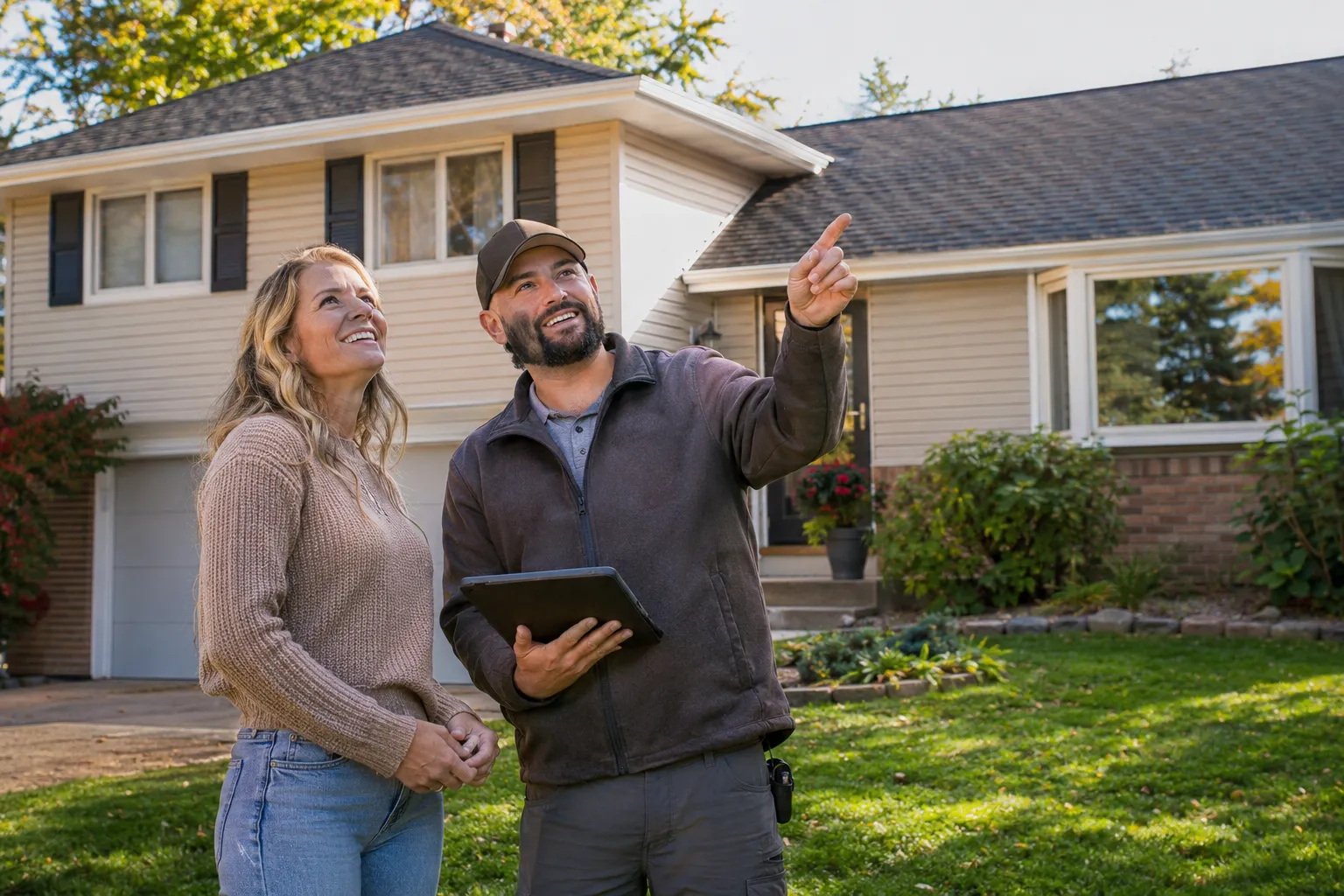
What to Do in the First 48 Hours After You Find Roof Damage
First, keep everyone safe
A lot of people think the first move is to get up there and look. In practice, the first move is to stay off the roof. Wet shingles, loose granules and a steep pitch make falls common. Look from the ground, from a window or from the attic instead.
If water is coming through the ceiling, act on the inside:
- Move furniture and rugs out of the drip zone.
- Set a bucket under the leak and lay a towel around it.
- If a ceiling bulges with water, poke a small hole to let it drain into a bucket. Stand clear first.
- Keep lights and cords away from wet areas. If water reaches a fixture or outlet, turn off power to that circuit.
If you smell gas or see sagging in the roofline or ceiling, leave the house and seek help from the proper emergency services.
Step 1: Document everything
Before anything is moved or covered, take photos and short videos. Capture:
- Ceiling and wall stains, with a wide shot and a close-up
- Granules or debris in gutters and on the ground
- Dented gutters, vents or siding, which can show hail or wind hit
- Any shingles on the lawn
- The date and time of the storm or when you first noticed the problem
Write a short note with the same details. You will need it for your insurer and for any provider you talk to.
Step 2: Read your policy and contact your insurer
One common misconception is that insurance automatically pays for a new roof. In practice, coverage depends on your policy, the cause of the damage and the age and condition of the roof. Check your deductible and ask your insurer what they need from you, such as photos, a claim number or an adjuster visit.
Do not sign anything that hands control of your claim to someone else until you understand it.
Talk to a provider (304) 244-5049
Step 3: Keep water out
If rain is coming, the goal is to limit further damage inside. A tarp is a temporary cover, not a fix, and putting one on takes care. Many homeowners ask the provider or a qualified person to do it, because the work happens on a damaged roof.
Keep your receipts for anything you buy or pay for. Your insurer may ask for them.
Step 4: Get a roof inspection
An inspection tells you how far the damage goes. A roof inspection after a storm typically runs $150 to $500, and the price varies by roof size and report detail. Ask for a written report with photos. That report helps with your claim and with comparing roofing quotes later.
Older homes need extra attention here. Past patches, a second layer of shingles or old flashing can hide damage. Ask the inspector to check the attic side of the deck for dark stains, damp insulation and daylight where it should not be.
Step 5: Line up written estimates
Once you know what you are dealing with, gather estimates for a replacement. Try to get more than one. Ask each provider to describe the same scope so the numbers can be compared. Our guide on cost factors explains what to look for.
Be wary of anyone who pressures you to sign on the spot. A storm brings out many door-to-door offers. Take your time and check what the contract says.
A simple 48-hour timeline
- First few hours: safety, photos, bucket and towels, power check
- Same evening: write your notes and read your policy
- Next morning: contact your insurer, start the claim
- Within the first two days: arrange an inspection and ask for written estimates
This service is for new roofs and full roof replacements only. It does not cover small repairs or other repair-only work.
Talk to a provider (304) 244-5049
Related guides
What to Do in the First 48 Hours After You Find Roof Damage: questions
Should I climb on the roof to check the damage?
No. Wet or damaged roofs are slippery, and a fall can cause serious injury. Look from the ground with binoculars, check ceilings and the attic for stains, and take photos. Let an inspector or provider go up. They have the gear and know how to move across a damaged roof.
How much does a roof inspection cost after a storm?
A roof inspection after a storm typically runs $150 – $500. The price varies by roof size and report detail. Ask for a written report with photos, because it helps with an insurance claim and gives every provider the same facts to work from.
Will my insurance pay for a new roof?
It depends on your policy, the cause of the damage and the age and condition of the roof. Do not assume. Read your policy, check your deductible and contact your insurer with photos and notes. They will explain what they need and how your claim is handled.
Ready to talk?
Need a new roof? Call (304) 244-5049 to check provider availability and talk with a local provider. No obligation.
No obligationTalk to a local provider
One call puts you through to an independent local provider who can talk through your project.
Talk to a provider (304) 244-5049
No obligation